
Drum Compression in the Mix: A Complete Guide
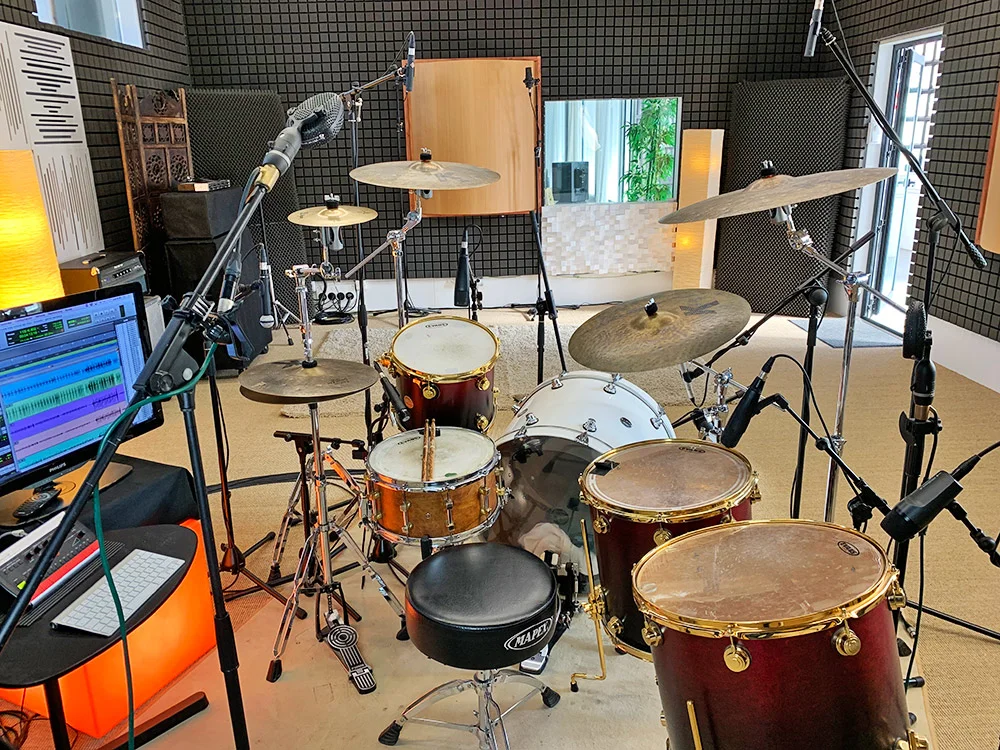
Drum Compression in the Mix: Everything You Need to Know
For decades, people have been asking me the same question in sessions, masterclasses, and emails: "Toni, how do you compress drums in the mix?" And I always give the same answer: compression is one of the most powerful tools in music production, but it's also the most misunderstood and most poorly applied. After 35 years recording with artists like Alejandro Sanz, Juanes, Antonio Orozco, and Sergio Dalma, I've learned that compression is not a magic recipe. It's a language you need to learn to speak.
Today I want to share everything I know about how to compress drums in the mix. Not just parameters and numbers, but the philosophy behind every decision. Because understanding the *why* will always be more valuable than memorizing the *how*.
What Does a Compressor Actually Do to Drums?
Before we talk about ratios and attack times, I need you to understand what's physically happening. Uncompressed drums have an enormous dynamic range. The initial hit of a kick drum or snare can have a brutally high transient peak that lasts milliseconds, followed by a body and tail that decay at much lower levels. That difference between the peak and the body is exactly what a compressor controls.
When you apply compression, you're making decisions about two fundamental things:
1. How much you control those peaks (ratio and threshold)
2. When the compressor engages and when it lets go (attack and release)
This might sound simple, but in practice this is where all the art lives. A badly adjusted compressor can kill the groove of a drum kit in seconds. And a well-adjusted compressor can make that same kit sound like it took on a life of its own.
The Snare: The Most Delicate Element to Compress
The snare is, in my experience, the drum element where compression makes the biggest difference and where it's easiest to get it wrong. In my sessions at Groove Factory Studios, by the time we've captured the snare with the main microphone — usually a Shure SM57 or a Sennheiser MD441 through a Neve 1073 preamp — what arrives at the mix already has character. But compression is what decides whether that character shines or gets flattened.
Attack: Let the Transient Through
This is the most common mistake I see. People attack the snare too fast and crush that initial click, the first impact that defines the instrument's presence in the mix. My usual starting point is an attack of 8 to 15 ms. This allows the transient to pass through to the compressor intact and only then begin to control the body of the sound.
But be careful: if you need more aggression, a slower attack (20-30 ms) makes the compressor engage even later, letting even more transient through. This can produce a very punchy and present sound, especially in genres like rock or high-energy pop.
Release: The Secret of Groove
Release is, for me, the most musical parameter of all. If the release is too slow, the compressor is still acting when the next hit arrives and flattens the groove. If it's too fast, it introduces distortion and artifacts. The trick I always recommend is to set the release based on the song's tempo: the compressor should recover just before the next hit. In a song at 90 BPM with snare on 2 and 4, that gives me 666 ms per beat, so a release of between 150 and 300 ms usually works very well.
Ratio and Threshold for Snare
For snare I usually work with moderate ratios, between 3:1 and 6:1. Nothing above 10:1 unless you're looking for a very specific effect. I set the threshold so gain reduction is between 4 and 8 dB on the hardest hits. This is enough to control the dynamics without destroying them.
The Kick Drum: Control and Punch
The kick drum is a different story. What I'm primarily looking for here is consistency and definition. In genres where the kick needs to hit the listener in the chest — pop, rock, urban — compression is fundamental for making every hit land with the same impact regardless of whether the drummer played harder or softer in that moment.
With kick drum, my reference parameters are usually:
• Attack: 25-50 ms (I want the initial click to pass through cleanly)
• Release: auto or between 50-100 ms (kick has less sustain than snare)
• Ratio: 4:1 to 8:1
• Gain reduction: 6-10 dB
One important thing: in Groove Factory Studios, before the signal reaches the DAD AX64 converter, the kick has already passed through an API 512c preamp that gives it a very specific color. That's already character compression, even if it's not a compressor per se. The API has a soft saturation that controls peaks in a very musical way. So when I get to the mix, the kick already arrives with more manageable dynamics and I can be more subtle with compression in the DAW.
Overheads and Room Mics: Compression to Create Atmosphere
This is where many producers make the mistake of not compressing at all, or compressing the same way they do close mics. Overheads and room microphones have a different function: they're not the direct sound source, they're the tail, the space, the room. And compression on these elements can work wonders for creating a sense of space and cohesion.
In my sessions, overheads are usually a pair of small-diaphragm condensers — typically Neumann KM184s or similar — and I process them very differently from snare or kick:
• Slow attack (50-80 ms): I want the direct transients to pass through untouched
• Long release (300-500 ms): I want the compressor to breathe with the natural decay of the room
• Low ratio (2:1 or 3:1): just a little glue, nothing dramatic
• Minimal gain reduction (2-4 dB): subtlety is the key
When it's done right, compression on overheads creates that feeling of the drums "breathing" as a unit, not as separate pieces.
Parallel Compression: My Favorite Technique
If there's one technique that has transformed the sound of my recordings over the last 15 years, it's parallel compression. Also called New York compression, the idea is simple but the result is extraordinary: you blend the uncompressed signal with a heavily compressed version of the same signal.
Here's how I do it:
1. Send the drum bus to an auxiliary channel
2. On that aux, apply very aggressive compression: ratio 10:1 or more, fast attack, medium release, 15-20 dB of gain reduction
3. Blend that compressed channel under the original, just enough to add body and sustain without losing the punch of the uncompressed transients
The result is a drum sound that has both the immediate impact of uncompressed transients and the substance and weight of the heavily compressed version. The best of both worlds.
Drum Bus Compression: The Final Glue
In addition to compressing individual elements, I always process the complete drum bus with a glue compressor. My favorite tool for this — whether in hardware or emulation — is the SSL G-Bus style: a VCA compressor with a very musical curve that brings all the drum elements together and makes them sound like one single thing.
The drum bus parameters are deliberately gentle:
• Ratio: 2:1 or 4:1
• Attack: 30 ms
• Release: auto
• Gain reduction: 2-4 dB
I don't want it to be noticeable. I just want someone to feel like something's missing when they bypass it. That's what a good bus compressor does when it's dialed in right.
Common Mistakes I See Constantly
After so many years working with producers, mixers, and artists of all kinds, there are mistakes I see repeated over and over:
1. Compressing Everything the Same Way
Every drum element has different needs. The snare is not the kick, the hi-hat is not the room mic. Treating them all the same is the fastest road to a flat, lifeless mix.
2. Trusting Only Your Eyes
Gain reduction meters are useful, but your ears are in charge. I've seen people obsess over the compressor showing exactly -6 dB of reduction without listening to whether that actually makes musical sense.
3. Attack That's Too Fast
The number one mistake. It crushes transients and makes the drums lose presence and impact. Always start with the slowest attack and shorten it gradually until you find the right balance.
4. Ignoring Release
Release determines groove. A badly adjusted release can completely change the feel of a performance.
5. Compressing Instead of Editing
Compression is not a substitute for good editing. If there are massive dynamic inconsistencies in the performance, edit first, then compress. In that order.
The Philosophy Behind All of This
After 35 years of career and hundreds of recordings, I've arrived at a very clear conclusion: compression must serve the music, not the numbers. When I was recording with Alejandro Sanz or with Juanes, nobody in the room was asking whether the ratio was 4:1 or 6:1. The question was always: does it sound good? Does it give energy to the song? Does it help the message reach the listener?
All the parameters I've shared here are starting points, not absolute rules. Music changes, genres change, songs change. What doesn't change is the need to listen carefully and make decisions in service of the song.
If you have doubts about how your drum mix sounds, or if you're working on a project where you need real drums recorded with these techniques, you know where to find me. Groove Factory Studios is here for exactly that.
*Did you find this guide useful? Leave your questions in the comments or write to me directly. And if you have a project in mind, let's talk.*