
What Is a Microphone Preamp? Everything You Need to Know
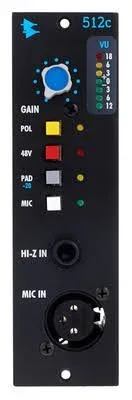
Microphone preamps are particularly important in any studio setting, yet many people are unaware of their actual function or why they are so vital. Although the full name, preamplifier, gives a hint about its purpose, this article explains everything you need to know and how to get the most out of them.
LINE SIGNAL
Before explaining what a mic preamp is, it is essential to discuss the line signal. Most audio devices, such as CD players, Hi-Fi equipment, keyboards, synthesizers, and even computer sound cards, work with a specific signal level known as line level. This standard ensures that devices from different brands are compatible and can be connected without issues. However, certain devices do not work at line level and cannot be connected directly. These typically include turntables, whose signal is known as phono level, electric guitars and basses, referred to as instrument level, and microphones, which utilise what we call mic level. Therefore, any device that does not output a standard line signal must use a preamp capable of converting its level so it can interface with the rest of the equipment.
WHAT IS A MIC PREAMP?
A mic preamp is a device that converts a microphone signal level into a line signal level by amplifying its voltage. When we produce sound, we excite the air with sound waves. This moving air, in turn, excites a diaphragm or an aluminium ribbon inside the microphone. This movement creates a very small electric current that is insufficient for recording. Through microphone amplifiers, we can boost this current.
There are many types of preamps, but none can amplify the signal without some form of distortion. Consequently, depending on the type of preamp used, we achieve a characteristic sound or colour. These devices can be found built into mixer channels, integrated into audio interfaces, or as standalone units.
WHY DO YOU NEED A GOOD PREAMP?
The decision to acquire a specific preamp depends on many factors, but there are several reasons why choosing a high-quality one is important. Its primary function is to amplify the output signal while offering different sonic textures. A high-quality preamp provides a clean and precise signal that avoids noise and distortion while offering a greater dynamic range. While some preamps aim to amplify sound as transparently as possible to provide a much clearer signal than cheaper models that generate background noise, others are chosen for the colour they add to the recording. Finally, the choice depends on the situation and instruments involved. For instance, recording drums live might require multiple preamps ranging from eight to thirty-two channels.